
Home
Joel Michael Reynolds (PhD, MA) is Senior Research Scholar in the Kennedy Institute of Ethics, Associate Professor of Philosophy and Disability Studies, Director of the Disability Studies Program, and Faculty in the Medical Humanities Initiative at Georgetown University. They are jointly appointed in Georgetown University’s School of Medicine and Medical Center as Faculty in the Pellegrino Center for Clinical Bioethics as well as in the Department of Family Medicine. They co-chair the School of Medicine’s bimonthly Ethics M&M Conference and sit on the MedStar Washington Hospital Center Ethics Consult Committee. They are a Faculty Scholar (Class of 2025) of the Greenwall Foundation and a 2025-26 Faculty Fellow of the Georgetown-Howard Center for Medical Humanities and Health Justice (MHHJ) for a project on disability and AI implementation in healthcare. Reynolds is founder and editor-in-chief of The Journal of Philosophy of Disability, co-founder and co-editor of the book series Oxford Studies in Disability, Ethics, and Society, and President of the Society for Philosophy and Disability. An internationally recognized expert on disability, their work has been translated into multiple languages, and they have given over 150 keynote addresses and endowed lectures, conference talks, and grand rounds at universities and schools of medicine across the globe. In recognition of the impact of their scholarship, they were named an Honorary Fellow of the McLaughlin College of Public Policy at York University in 2022 and elected as a Fellow of The Hastings Center for Bioethics in 2023. Dr. Reynolds’ work has appeared or been cited in outlets including TIME, The Atlantic, The New Yorker, The Wall Street Journal, Forbes, National Post, Truthout, AEON, The Conversation, Health Progress, The Hastings Bioethics Forum, The Philosopher, and a Tedx talk.
Bridging inquiry across the humanities, social sciences, and medical practice, Dr. Reynolds’ research explores foundational and applied issues in ethics, especially in relation to disability and embodiment. Their work seeks health justice across sectors by implementing the principle of accessibility via methods that prioritize first-person data (phenomenology, ethnography, and other grounded qualitative approaches) and that center the lived experience of historically marginalized and oppressed groups. Dr. Reynolds leads the RADAR Lab (Reynolds Applied DisAbility Research lab), which focuses on (i) improving medical education (UME, GME, and CME) concerning equity and quality of care for disabled patients and (ii) disability bioethics research as applied to clinical practice and systems-level healthcare delivery.
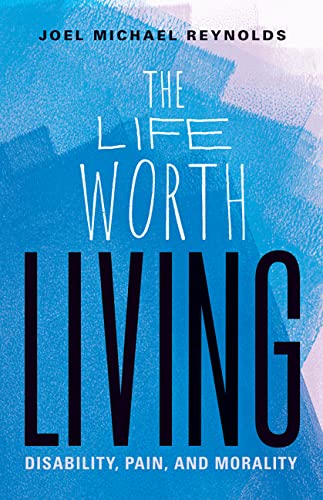
Reynolds is the author or co-author of over seventy scholarly publications spanning philosophy, biomedical ethics, and public health as well as six books: The Life Worth Living (University of Minnesota Press, 2022), The Disability Bioethics Reader (Routledge, 2022; 2nd edition 2027), Disability Justice in Public Health Emergencies (Routledge, 2024), The Art of Flourishing (Oxford University Press, 2025), The Meaning of Disability (Oxford University Press, 2027), and Philosophy of Disability: An Introduction (Polity, 2028). Their article-length work appears in leading journals across multiple fields, including The New England Journal of Medicine, Nature Medicine, Episteme, AMA Journal of Ethics, Neuroethics, Hastings Center Report, Critical Philosophy of Race, Journal of Medical Ethics, JAMA Health Forum, Disability and Health Journal, Hypatia: A Journal of Feminist Philosophy, Cambridge Quarterly of Healthcare Ethics, Chiasmi International: Contemporary Phenomenology and Merleau-Ponty Studies, and Biological Psychiatry. Current research includes studies for Philosophical Foundations of Disability Law, Methods in Medical Ethics, The Encyclopedia of Phenomenology, The Oxford Handbook of Genetic Counseling, and The Oxford Handbook of Social Epistemology.


Based on their 2018 AMA Journal of Ethics article, “Three Things Clinicians Should Know About Disability,” Dr. Reynolds speaks to clinicians across specialties and consults for healthcare systems across the globe concerning how to improve the quality and equity of care for patients with disabilities, including recent grand rounds and keynotes at the schools of medicine at Harvard, Yale, Penn, Tufts, and USC and healthcare systems including Kaiser Permanente, Hackensack Meridian Health, Horizon Health Network, and Parkland Health & Hospital System. Reynolds was recently Visiting Professor in Critical Care Ethics & Decision-Making at the University of Pittsburgh School of Medicine and Visiting Professor in Bioethics at Cleveland Clinic. They are a member of the Genetic Support Foundation’s Alliance for Disability Justice and Ethics in Reproductive Genetics, a 2025-2028 affiliate of the Albert Gnaegi Center for Bioethics at Saint Louis University, and since 2021, have been Visiting Lecturer in Bioethics at the Yale School of Medicine.
Dr. Reynolds’ work has been supported by the National Endowment for the Humanities, the Andrew W. Mellon Foundation, the Howard Hughes Medical Institute, and the Greenwall Foundation. You can reach Dr. Reynolds (they/he) by email at joel.reynolds@georgetown.edu.
If you want to learn more, you can find open-access versions of almost all of their research on PhilPapers.

 Joel Michael Reynolds